The Hammond Organ and Its Tone Cabinet: Why the Pair Matters
A Hammond without its tone cabinet is only half the instrument. Here's what that second box is doing and why it matters.
September 2, 2026 · 3 min read
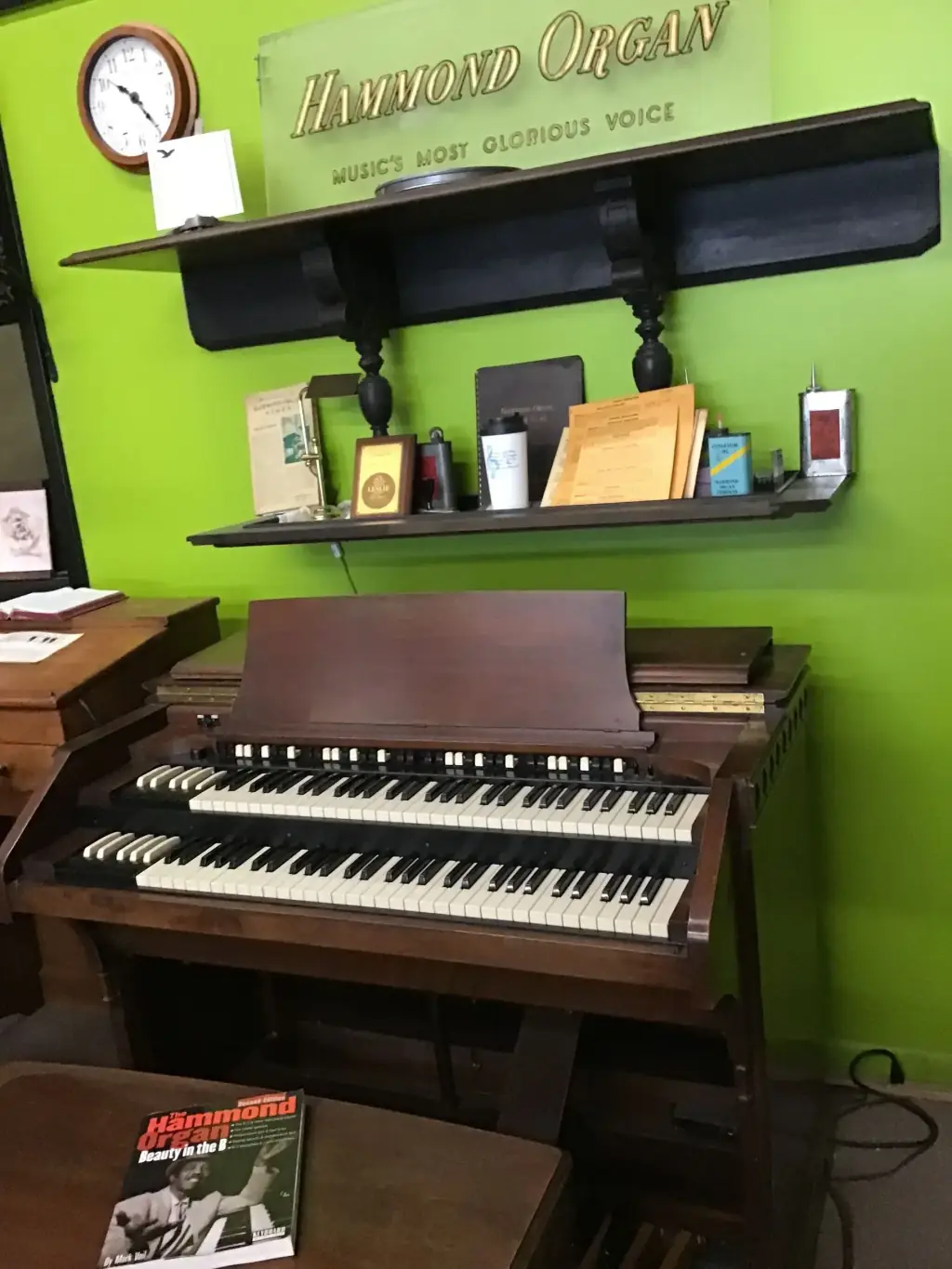
We still have the original sign hanging over our Hammond corner: Music's Most Glorious Voice. It's an old piece of signage, but the claim behind it holds up, a Hammond organ paired with its tone cabinet is one of the most distinctive sounds in American music, church, gospel, blues, jazz, all leaned on it. What surprises a lot of people who come in is learning that the organ itself is only half the story. The tone cabinet, the separate speaker box that sits apart from the console, is doing something the organ's own electronics can't do alone.
What the tone cabinet is actually doing
A Hammond tone cabinet houses a rotating speaker system, a treble horn and a bass drum both spin, at different, switchable speeds, which pushes the sound out into the room from a moving source instead of a fixed one. That rotation is what creates the swirling, almost breathing quality people associate with a Hammond sound, a natural chorus and vibrato effect that comes purely from physical motion, not from electronics faking it. Slow the rotation down and you get a warmer, rounder tone, closer to a still organ. Speed it up and the sound opens into that fast, shimmering swirl. Switching between the two speeds mid-note, the classic move, is a big part of how a good Hammond player phrases.
Why the pairing is inseparable
Play a Hammond console through an ordinary amplifier or a flat PA speaker and you'll get sound, but you won't get the instrument. The drawbars, the harmonic controls on the console that let a player build a tone out of individual overtones, were designed with the tone cabinet's movement in mind. That's why a Hammond and its matched tone cabinet are properly thought of as one instrument in two boxes, not an organ plus an optional accessory. Our Hammond CV with its tone cabinet and our Hammond RT-3 with its pedalboard and tone cabinet are both set up on the floor exactly this way, so you can hear the two pieces working together rather than imagining it from a description.
- The tone cabinet's rotating horn and drum create the swirl, not the organ's electronics alone
- Two speeds, slow and fast, give a Hammond player two distinct textures from one instrument
- Drawbars build tone through harmonics, and that tone is shaped by the cabinet it plays through
- A Hammond and its matched cabinet are one instrument in two boxes, not organ plus accessory
- Church and gospel players in particular tend to know exactly what they're listening for in a cabinet's rotation
For church musicians and returning players
A lot of the Hammond players who come through our doors are church musicians, either shopping for a first instrument for a congregation or replacing one that's finally given out after decades of Sunday service. If that's you, the thing worth doing before you buy is exactly what we said above: sit down, play the drawbars, and listen to the cabinet do its work across both speeds. A Hammond that looks right but whose cabinet motor or drawbar contacts have gone quiet won't give you the sound you remember. We keep a service bench on-site for exactly this kind of work, drawbar contacts and rotating mechanisms both need real attention over the decades, not just a clean cabinet.
It's also worth asking about the console and cabinet as a matched pair rather than assuming any Hammond will work with any cabinet you happen to find separately. The wiring, the speed switching, and the way the drawbar tone was voiced were all built around a specific relationship between the two boxes. If you've inherited a console without its original cabinet, or a cabinet without its console, tell us that up front, it changes what we'd recommend and whether pairing it with a different unit is realistic.
What's on our floor
Hammond inventory moves like everything else here, what's currently set up includes consoles, tone cabinets, and console organs like our Hammond A100 in cherry. Rather than list serial numbers and finishes that may have already sold, the honest thing to do is call or come by and hear what's actually plugged in and spinning today. We're at 1504 Lamy Ln, Monroe, open Monday through Saturday 10 to 5, closed Sunday. James is at 318-372-1449, Frank at 318-680-5737. Come listen to the drawbars move through both speeds before you decide anything, it's the only real way to know what you're buying.
Paul Hewitt Music Co. — (318) 372-1449
Call (318) 372-1449More articles
Buying Your Child's First Piano: What Actually Matters
Before you worry about baby grand versus upright, get the three things right that actually decide whether your child keeps playing.
Upright, Console, Studio, Spinet: What the Words Actually Mean
The words on a piano's spec sheet aren't marketing, they describe real differences in height, action, and tone. Here's what each one means.