01 · The console
Hammond CV
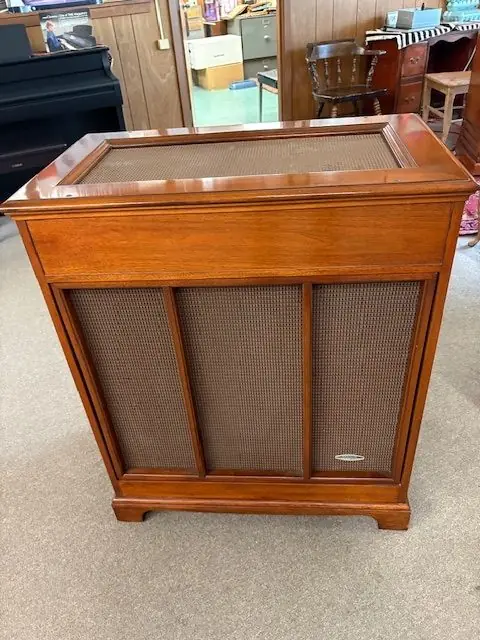
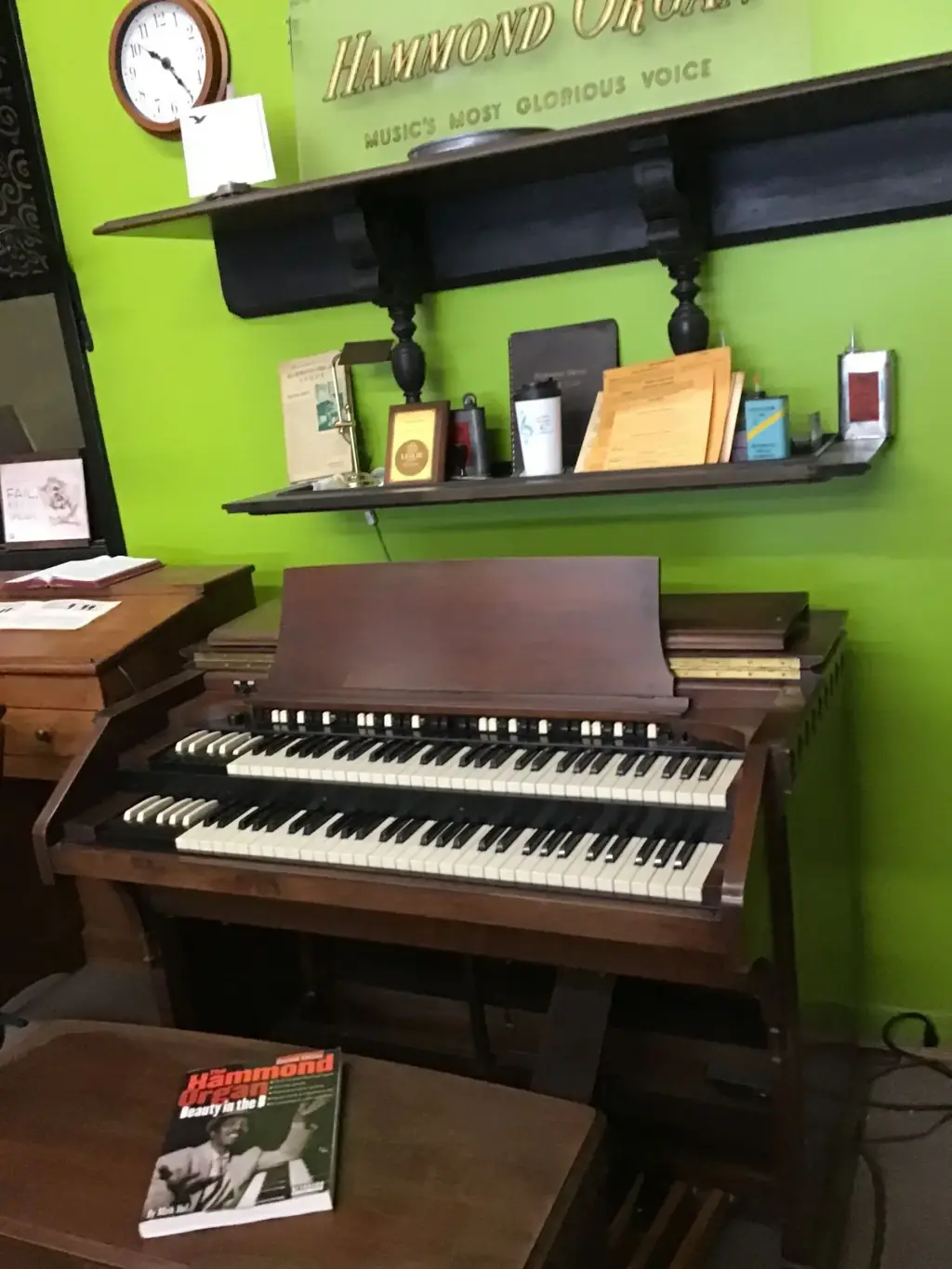
A Hammond CV console, paired with its own tone cabinet, has been part of the corner's recent lineup. Two manuals, a full set of drawbars, and the tonewheel hum you only get from the real thing.
Hammond corner
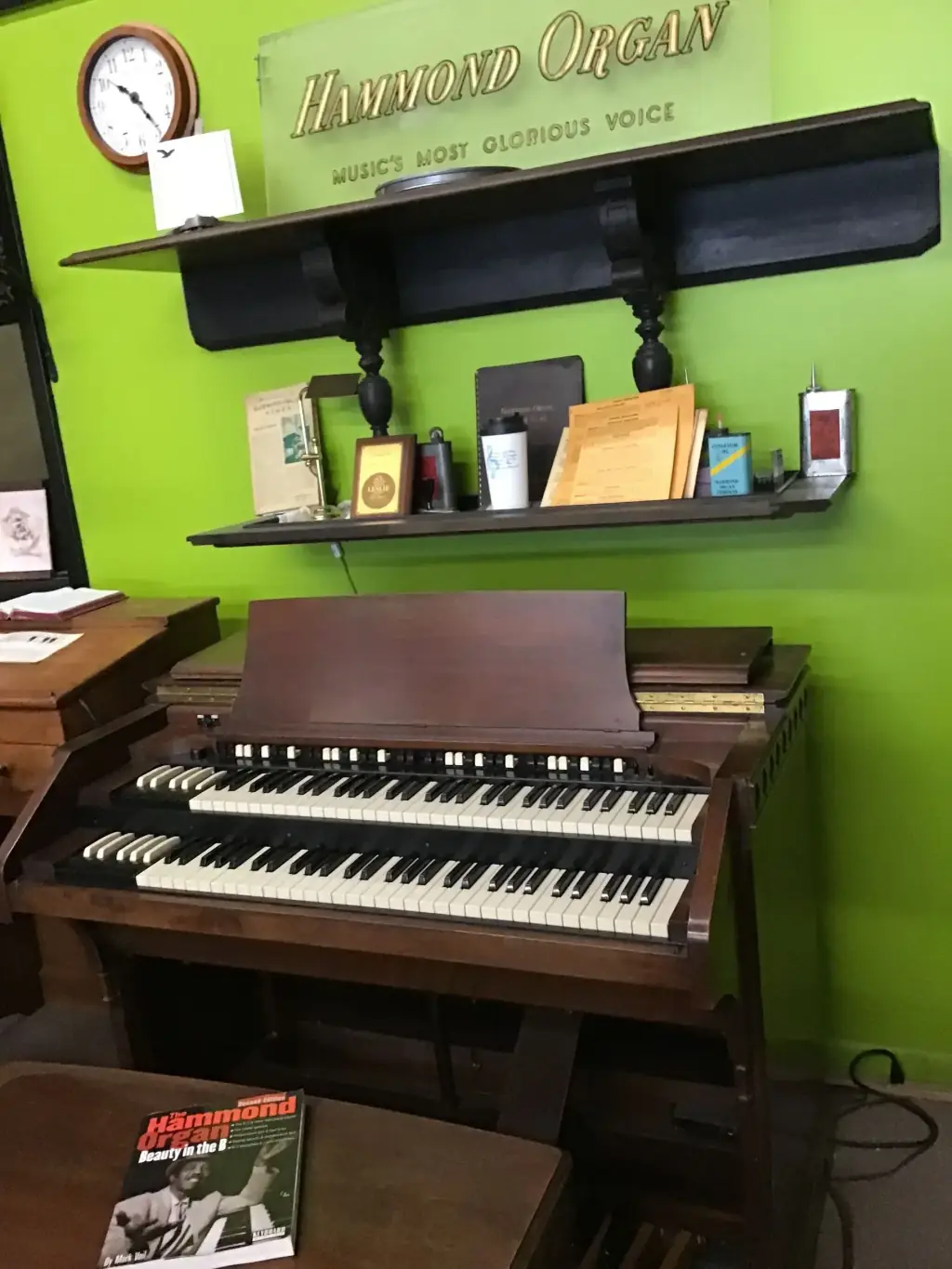
The console and the tone cabinet that made Hammond 'Music's Most Glorious Voice,' photographed under our own original sign at 1504 Lamy Lane.
Walk to the back corner of the showroom and you'll find the original Hammond sign still hanging over a console and a separate speaker cabinet, which is exactly how the instrument was built to be sold. A Hammond organ is two pieces, not one. The console is where the player sits, with its manuals, drawbars and a set of electromechanical tonewheels spinning inside that generate the actual pitch. The tone cabinet is the other half, and it isn't a generic amplifier. Most Hammonds pair with a Leslie-style rotating speaker cabinet built specifically to move that sound through the room the way a Hammond is supposed to move it, with the slow warble and the fast tremolo that gives the instrument its signature swirl. Buy just the console and you've bought half an instrument. The floor here has carried a Hammond CV with its matching tone cabinet, a Hammond RT-3 paired with a full pedalboard, and a Hammond A100 console organ finished in cherry, and what's out today changes as pieces sell. Call 318-372-1449 or come look at the corner yourself.
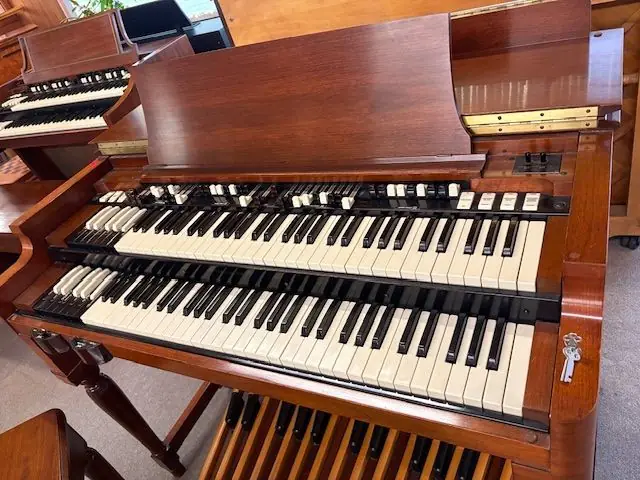
The row of drawbars along the front of a Hammond console isn't decoration, it's the entire tone-shaping system. Each one controls a different harmonic pulled from the tonewheel generator, pulled out toward you for more of that frequency, pushed in for less, and the combination you land on is your registration, your own signature sound built the way an organist would build a stop combination on a pipe organ. Church and gospel players across northeast Louisiana still come looking specifically for a real Hammond because that drawbar feel and the way a genuine tone cabinet moves air simply isn't the same thing a modern clone reproduces electronically. It's also a real commitment of space: a console and a tone cabinet are two separate pieces of furniture, both heavy, and worth measuring your doorway and your sanctuary or den for before you fall in love with one. That conversation is easier standing in front of the instrument than over the phone, so come sit at the manuals and hear a set of drawbars for yourself.
Paul Hewitt Music, Family owned and operated in Monroe since 1946. Call (318) 372-1449.
Recently on the floor
Not a fixed inventory, a sense of what's been standing here. Call before you drive over if you're chasing a specific model.
01 · The console
A Hammond CV console, paired with its own tone cabinet, has been part of the corner's recent lineup. Two manuals, a full set of drawbars, and the tonewheel hum you only get from the real thing.
02 · Its other half
The tone cabinet that ships with a Hammond CV isn't a speaker bolted on for volume. It's built to carry the organ's rotating-speaker swirl through the room, and a console without it is only telling half the story.
03 · In cherry
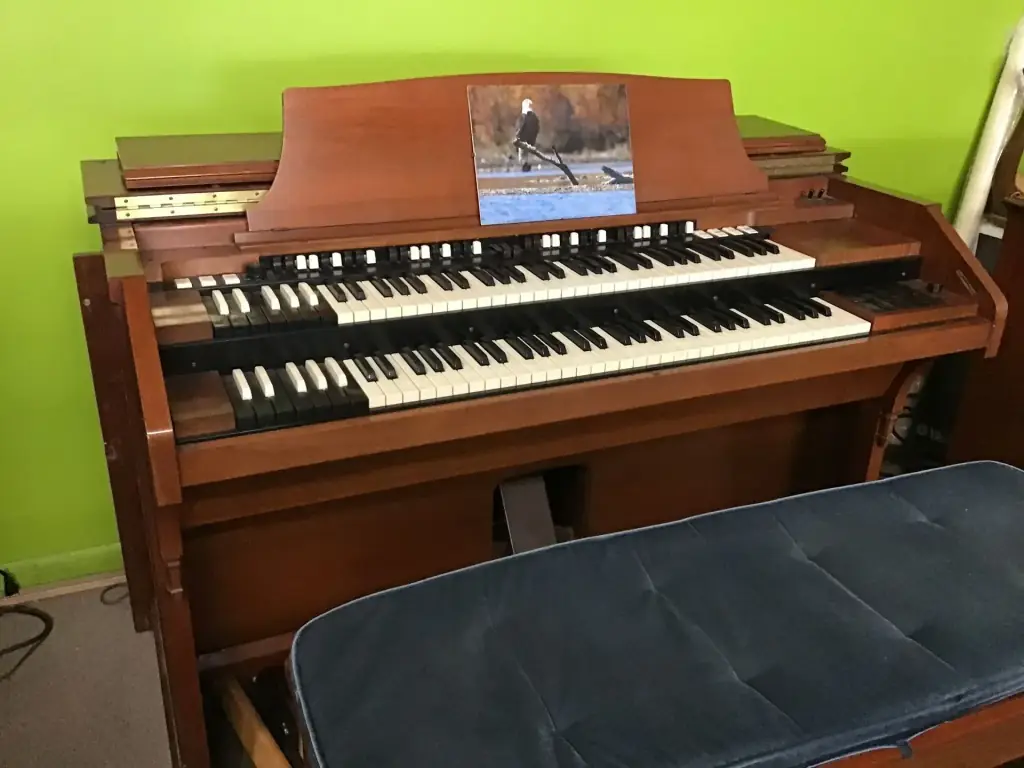
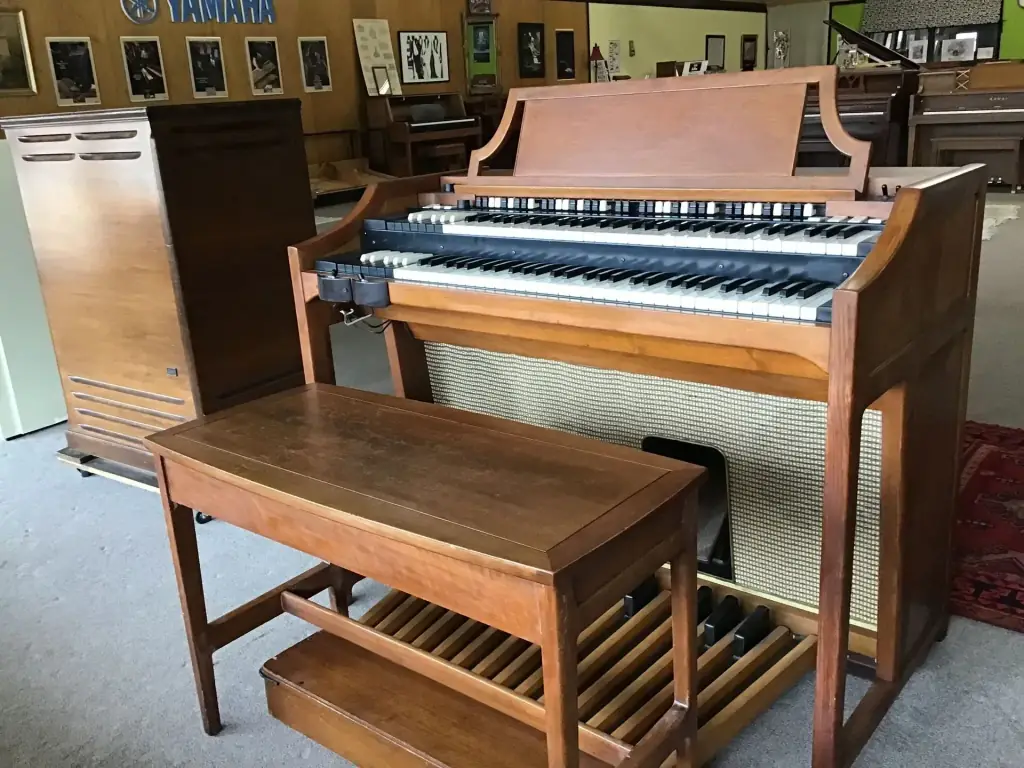
A Hammond A100 console organ finished in cherry has stood beneath our Yamaha dealer signage, a self-contained console-and-cabinet build in a warmer wood than the CV's.
04 · Nine drawbars
Nine harmonic drawbars per manual, pulled and pushed to build a registration by hand. This is the row of controls that gives a Hammond its actual voice, not a factory preset.
05 · Full pedal
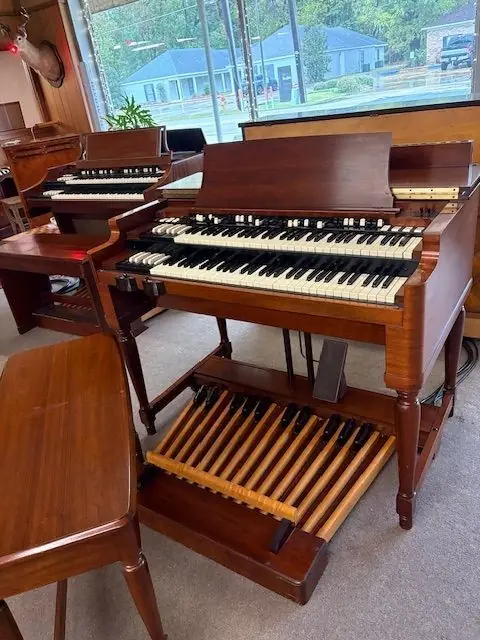
A Hammond RT-3 paired with a full pedalboard has been on the floor for players who need the bass pedals a church or gospel setting calls for, not just the manuals.
Why they still come looking
Most of the calls we get about Hammonds come from church musicians and gospel players who already know exactly what they're listening for. They've played a modern digital clone and it isn't quite it, not the tonewheel hum under a held chord, not the way a real tone cabinet's rotating speaker fills a sanctuary rather than a stage monitor. That's a genuine electromechanical instrument doing what it was built to do in 1946 and doing it the same way today. We keep the parts and service side of that going too, because an eighty-year-old organ is worth keeping playable, not retiring the first time a tonewheel needs attention.